Business Casual for Women: What to Wear (and What to Skip)
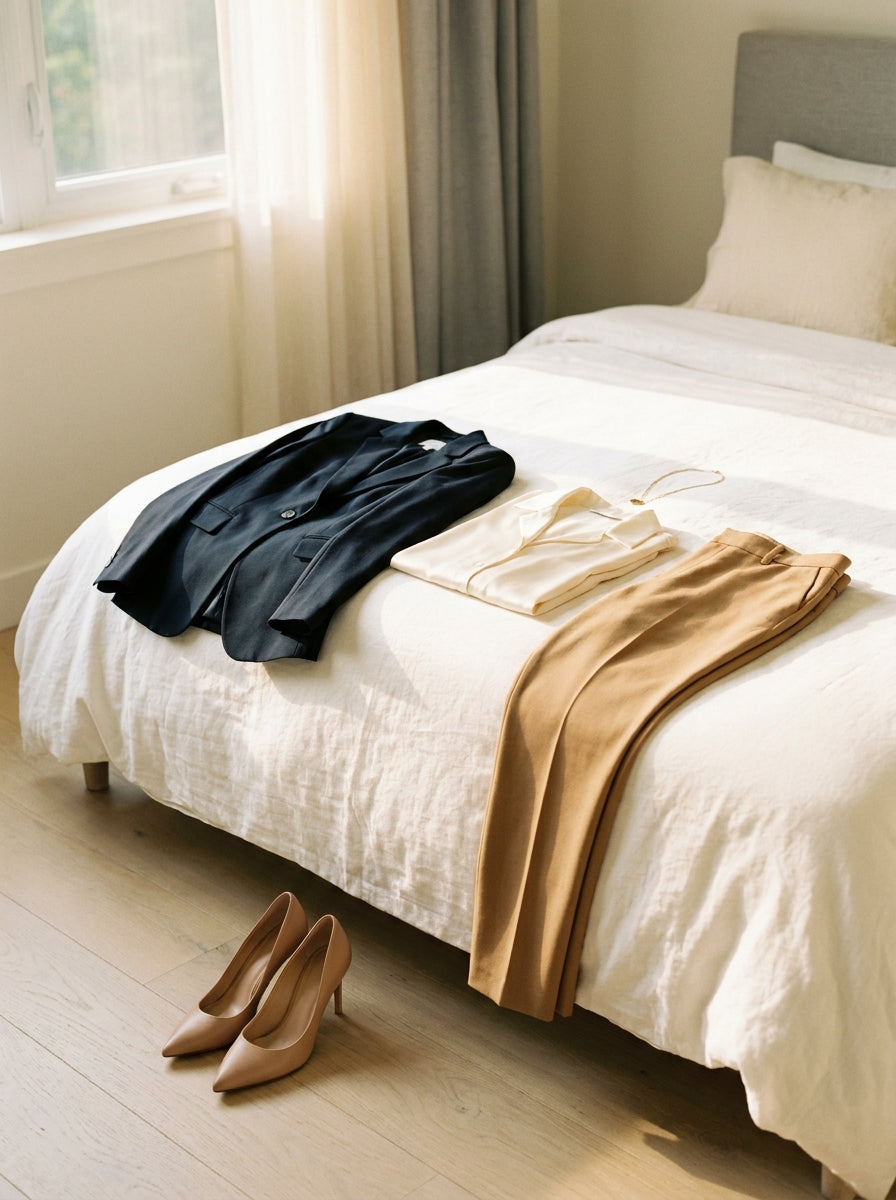
"Business casual" might be the most common dress code in American offices, and the most confusing one. It sits somewhere between a full suit and your weekend jeans, and every workplace draws the line a little differently. After years of getting dressed for the office, here is how I read it.
What business casual actually means
Business casual means polished but relaxed. You look ready for a meeting, but you are not dressed for a boardroom presentation. In practice that usually means:
- Structure on top: a blazer, a cardigan or a crisp shirt.
- Clean lines below: tailored trousers, a midi skirt or a simple dress.
- Quiet details: closed-toe shoes, small jewelry, nothing that needs explaining.
When in doubt, look at what the most senior women in your office wear on an ordinary Tuesday. That is your real dress code.
The pieces that always work
A tailored blazer
If you buy one thing, make it a blazer that fits your shoulders well. Navy and black go with everything; a soft camel or ivory feels a little warmer. A blazer turns a plain top and trousers into an outfit in two seconds.
Trousers that fit at the waist
Wide-leg and straight-leg trousers are the backbone of business casual. Look for a high waist, a pressed crease and a length that just grazes your shoe. If you are between sizes, our size guide lists the waist and hip measurements for every size.
Blouses and shirts
A silk-feel blouse in cream or white, a classic button-down and one soft color you love. Shirts layer under a blazer, tuck into trousers and work on their own when the office is warm.
Fine knitwear
A fine-gauge sweater or a long cardigan is business casual at its most comfortable. Knitwear also saves you on the days the air conditioning wins.
One easy dress
A midi dress in a solid color is the fastest outfit you will ever put together. Add a blazer for meetings and take it off for dinner.
What to skip
- Anything you would wear to the gym or the beach: leggings on their own, flip-flops, very casual sneakers.
- Very short hemlines and very low necklines.
- Ripped or heavily faded denim (some offices allow dark jeans on Fridays; check first).
- Logos and slogans. Business casual is about the shape and the fabric, not the label.
Five outfit formulas for the office
- Blazer + silk blouse + wide-leg trousers. The classic. Works for meetings, interviews and first days.
- Fine knit + midi skirt + loafers. Soft, easy and still very put together.
- Midi dress + blazer over the shoulders. One decision, done in a minute.
- Button-down + straight trousers + cardigan. The comfortable Friday that still looks intentional.
- Tonal outfit: cream blouse, cream trousers, camel blazer. Wearing one color family always looks expensive.
Business casual through the seasons
Spring and summer
Swap heavy wool for lighter fabrics: crepe, linen blends and fluid viscose. A short-sleeve blouse with wide-leg trousers is enough on hot days; keep a light blazer or cardigan at your desk for meetings and cold air conditioning. Sandals can work in many offices if they are simple and closed at the heel, but check your workplace first.
Fall and winter
This is when business casual is easiest to love. Layer a fine knit under a blazer, add a long coat for the commute and switch to loafers or ankle boots. Tights under a midi skirt or dress keep the same outfits working all winter.
Business casual vs. smart casual vs. business professional
- Business professional: a matching suit, a blouse and closed heels. Think client pitches, court, banking.
- Business casual: separates instead of a full suit. A blazer is optional, tailoring is not.
- Smart casual: more relaxed again. Dark jeans, knits and clean sneakers can appear, but the outfit still looks considered.
Frequently asked questions
Can I wear jeans for business casual?
Some offices allow dark, clean jeans, usually on Fridays. Pair them with a blazer or a fine knit so the outfit still reads as work. If you are new somewhere, wait a week and see what others wear.
Are sneakers business casual?
Plain leather sneakers are accepted in many relaxed offices, especially with tailored trousers. Athletic running shoes are not.
Do I need to wear a blazer?
No, but it is the quickest way to look polished. A structured cardigan can do the same job on easier days.
What should I wear on my first day?
Go one step more formal than you think: a blazer, a blouse and tailored trousers. It is always easier to dress down on day two.
A few things I have learned
Fit matters more than price. A blazer that sits right on your shoulders will look better than an expensive one that does not. Keep your colors simple so everything mixes, and let one piece do the talking each day: a soft color, a beautiful fabric or a pair of earrings.
Most of all, business casual should feel like you. If you feel confident walking into the office, you got it right.
— L.